Rakathon 2026: How We Built Klidka in 24 Hours and Finished 6th
At Rakathon 2026, the Czech national AI hackathon against cancer, team Canbe built Klidka, an app for calmer pre-surgery prep, and finished 6th of 100 teams.
 Ondřej Tomášek9 min read
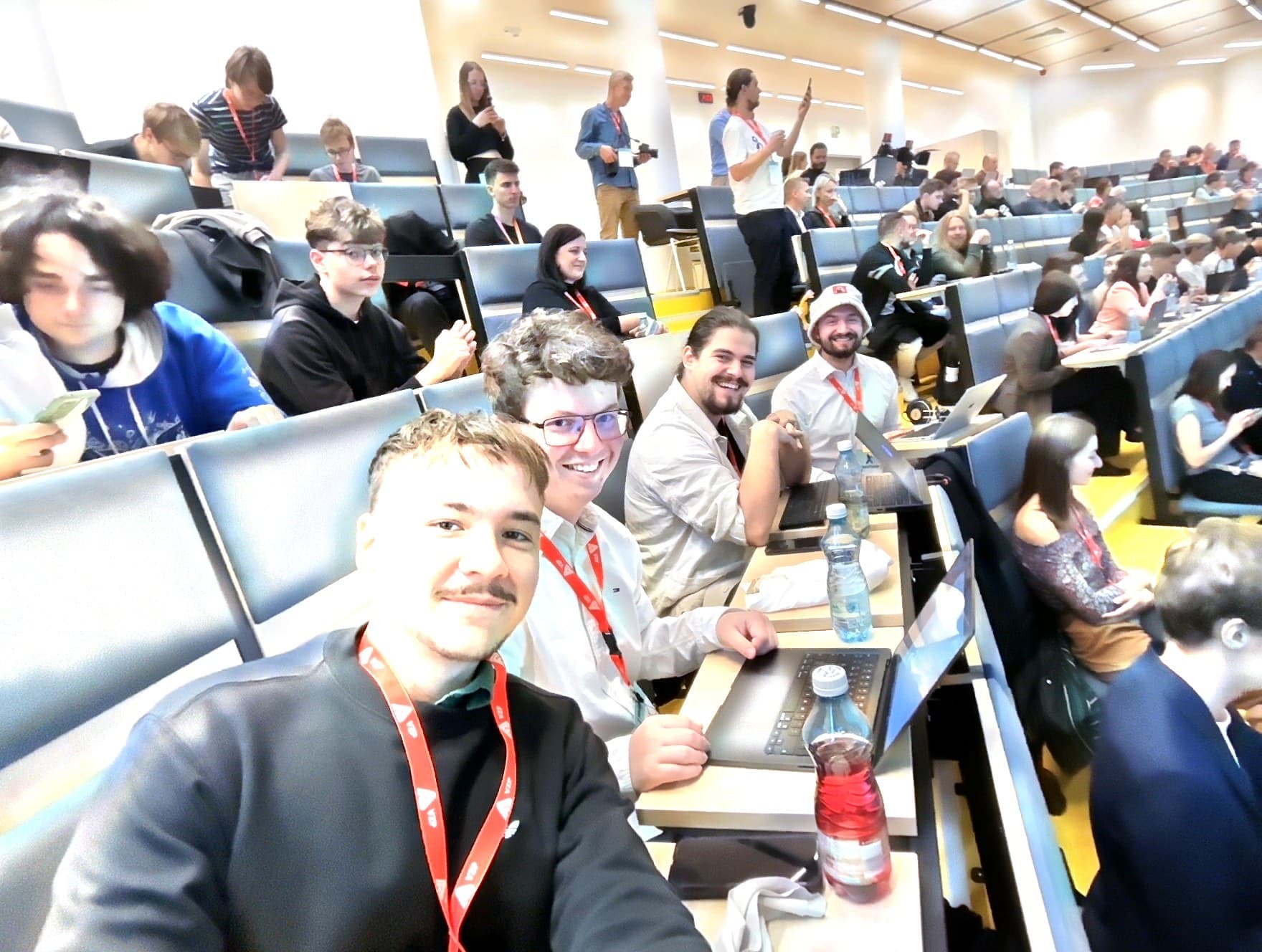
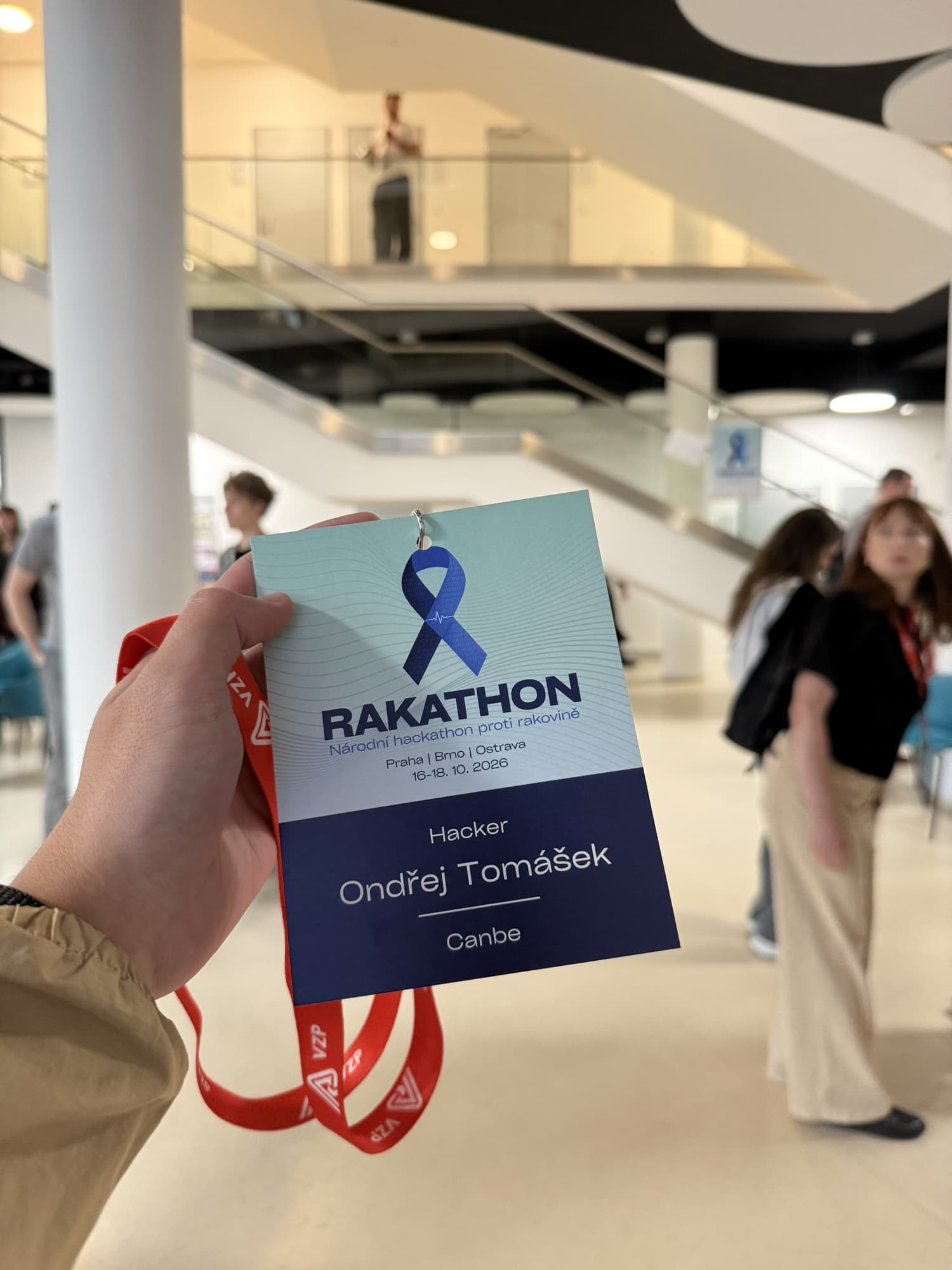
Rakathon 2026 was the Czech national AI hackathon against cancer: three cities, one weekend, and 24 hours to build something a hospital could actually use. My team, Canbe, built Klidka, an app that lets patients get ready for surgery without running from one doctor's office to the next, so the anaesthesia clinic can catch problems like anaemia while there's still time to treat them.
We didn't make the podium. We finished 6th out of 100 teams, which, honestly, feels pretty good. Here's what we built, why it matters, and what I'm taking away from the weekend.
- Event
- Rakathon 2026, the national AI hackathon against cancer (Národní AI hackathon proti rakovině)
- Dates
- 16–18 October 2026
- Where
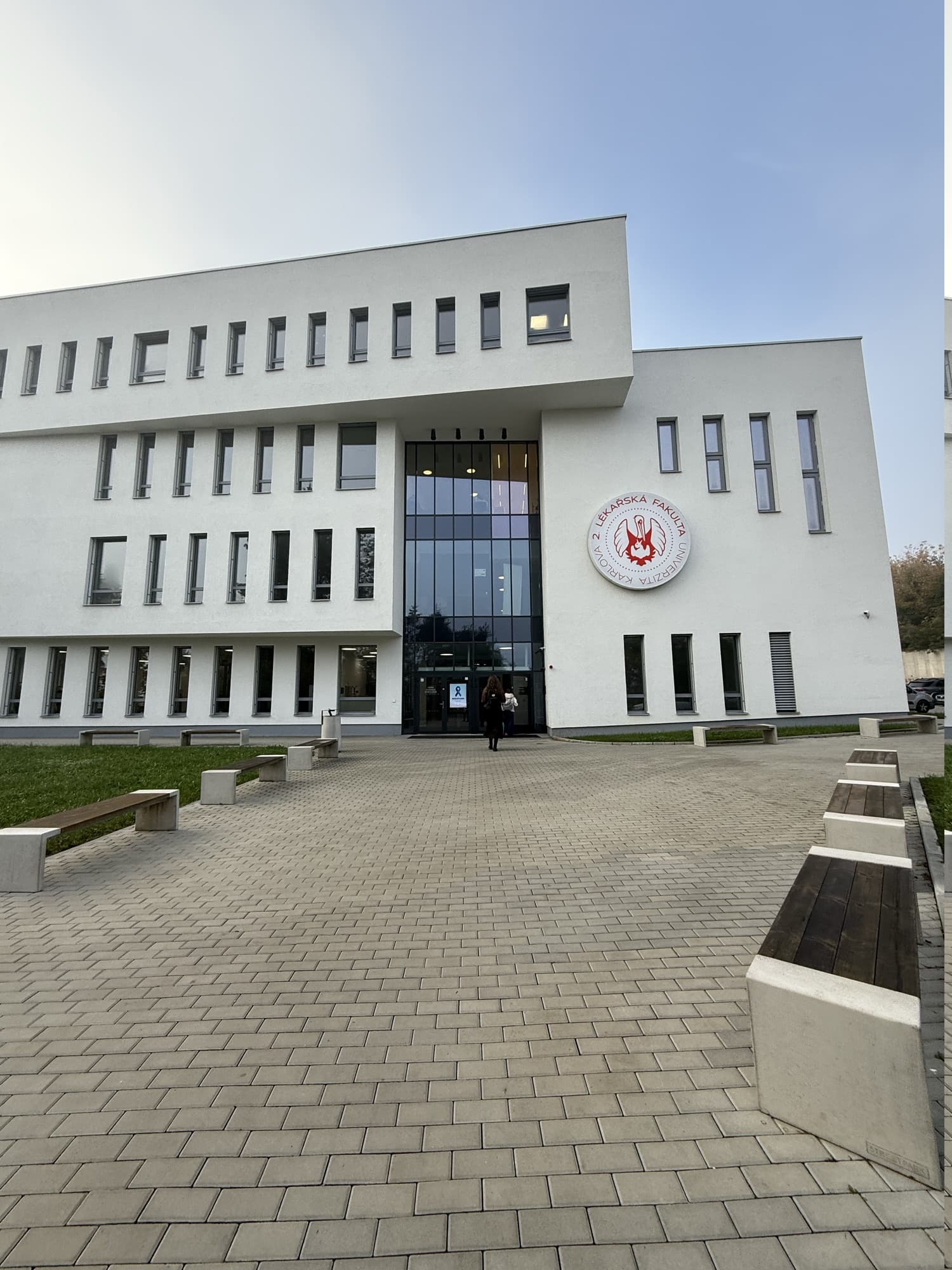
- Prague, Brno and Ostrava at the same time. We were in Prague, at the 2nd Faculty of Medicine of Charles University.
- Challenge
- SMART ONCO AA: Příprava bez čekání (prep without waiting), set by doc. MUDr. Jan Bláha, Ph.D., MHA, LL.M., VFN Prague
- Team
- Canbe: Tadeáš Kapic, Štěpán Varvařovský, Lukáš Vlček and me
- Result
- 6th of 100 teams
What is Rakathon?
Rakathon is a Czech hackathon where developers, doctors, data scientists and students build AI tools for cancer care. The 2026 edition ran in Prague, Brno and Ostrava at once, with the health insurer VZP as the main partner, under the patronage of the Czech Prime Minister, the Minister of Health and the government's plenipotentiary for AI. In total, 100 teams registered.
The format is simple and unforgiving. Hospitals and partners present their challenges on Friday, teams get 24 hours to build a working prototype, and on Sunday it all ends with pitches and an awards ceremony in Prague.
What makes it different from a typical hackathon is where the challenges come from: every one of them is set by people who deal with the problem every day.
The challenge: getting ready for surgery is a relay race
Our challenge came from doc. MUDr. Jan Bláha, Ph.D., MHA, LL.M., head of the Department of Anaesthesiology, Resuscitation and Intensive Care Medicine (KARIM) at the General University Hospital in Prague (VFN). Its name was SMART ONCO AA: Příprava bez čekání, roughly "preparation without waiting".
Before an operation, a patient collects a stack of results: from their GP, the lab, specialists, and finally the anaesthesia clinic. Each step waits for the one before it. The paperwork often sits in a drawer at home, and many older patients never log into a hospital portal.
The cost of that delay is concrete. Picture a patient whose haemoglobin is 104 g/l, but the GP report reaches the anaesthesiologist only a few days before surgery. That's too late to fix: intravenous iron needs at least two weeks to work, oral iron six to eight. In cancer surgery this isn't rare. More than one in five oncology patients goes into the operating room anaemic, and treating anaemia before surgery is a core part of patient blood management.
What we built: Klidka
Klidka comes from klid, the Czech word for calm. The idea is simple: the patient shouldn't have to know the right order of things. The clinic just needs to know as early as possible.
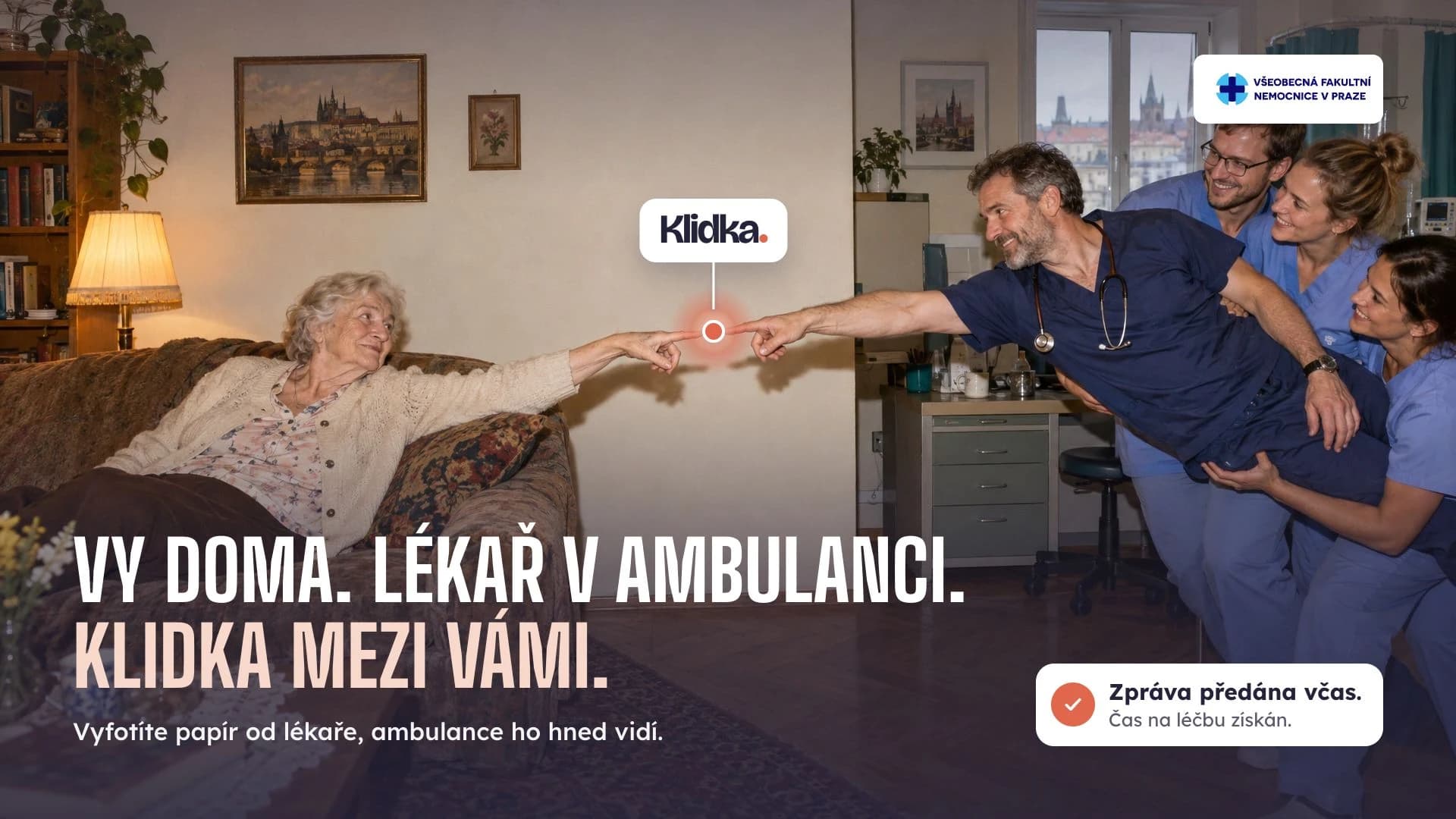
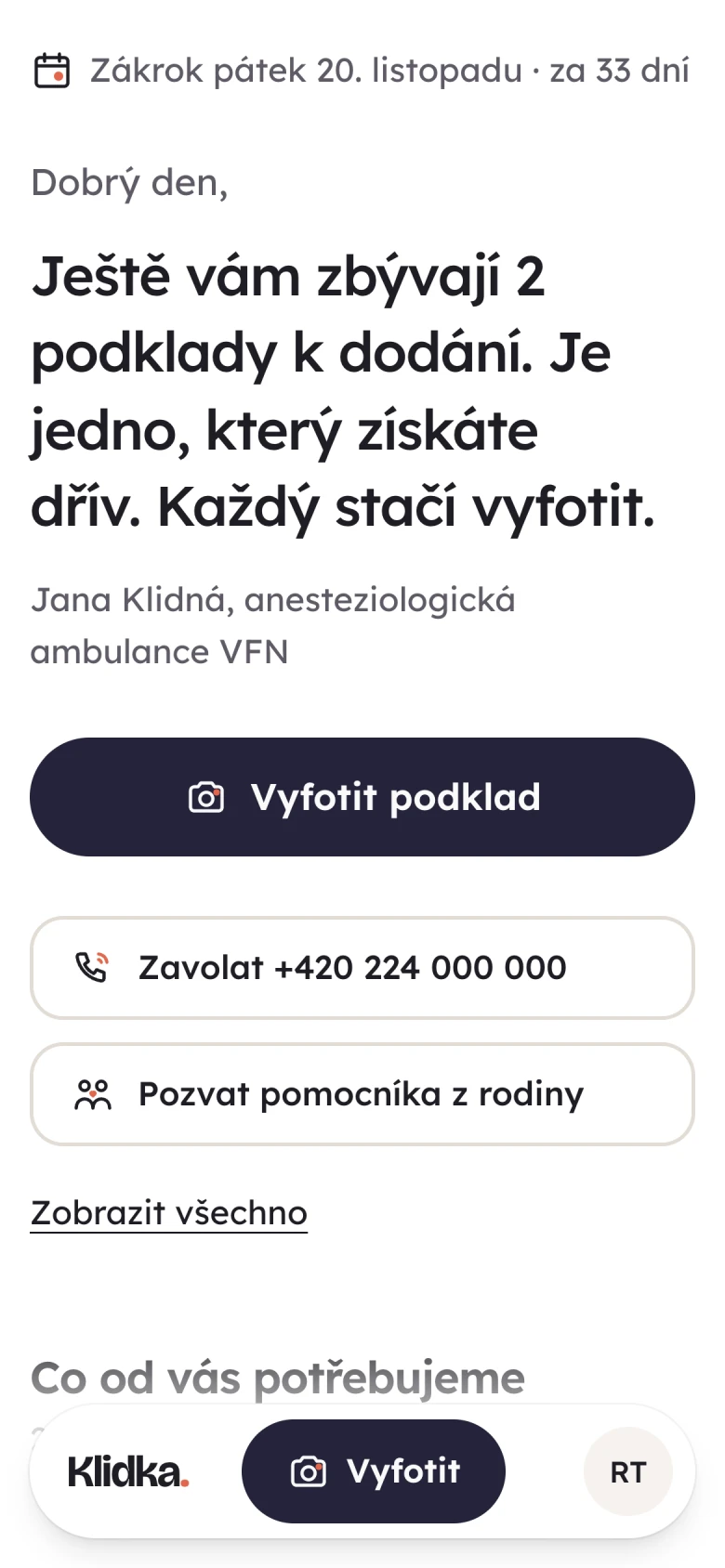
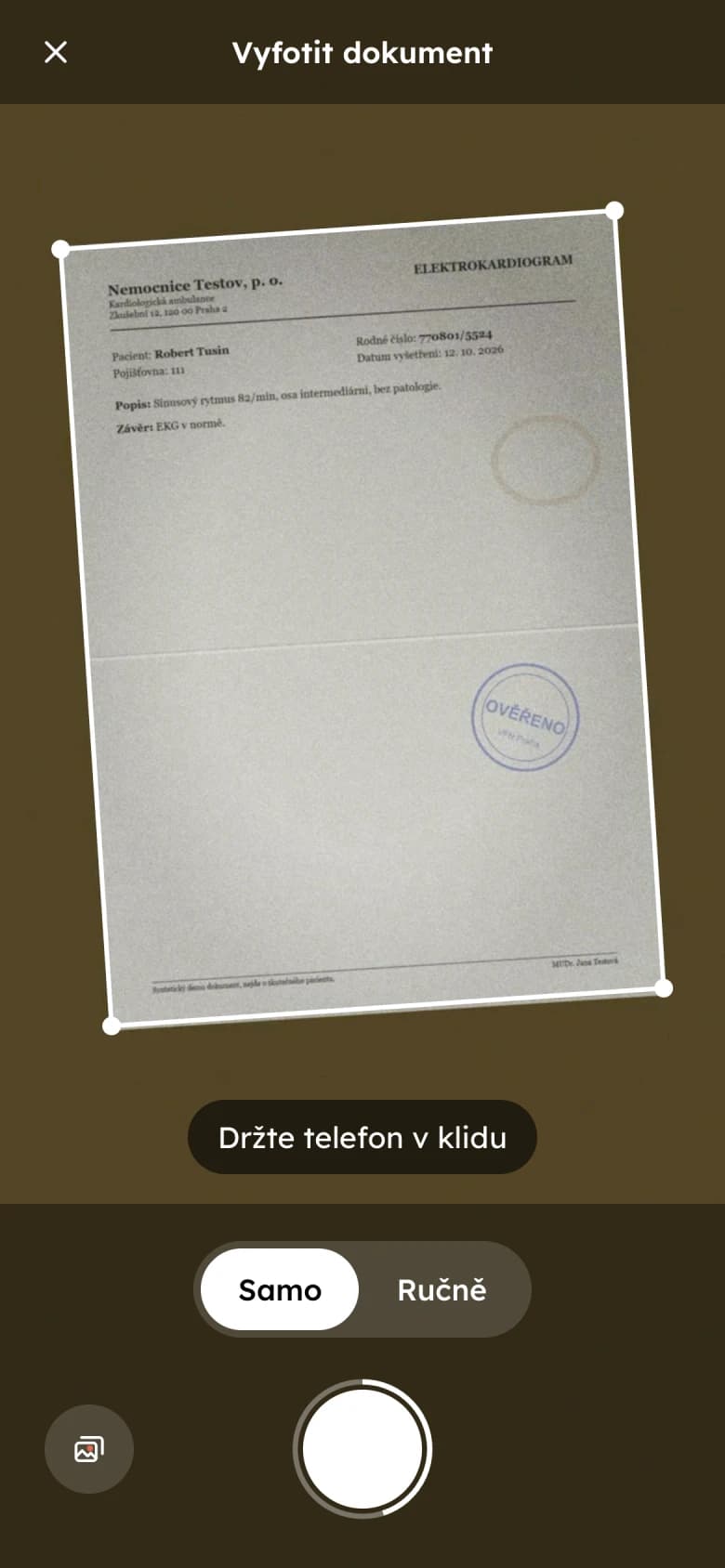
- Patients photograph documents as soon as they have them, in any order. No hospital portal to learn. After each photo they get a single message listing what's still missing.
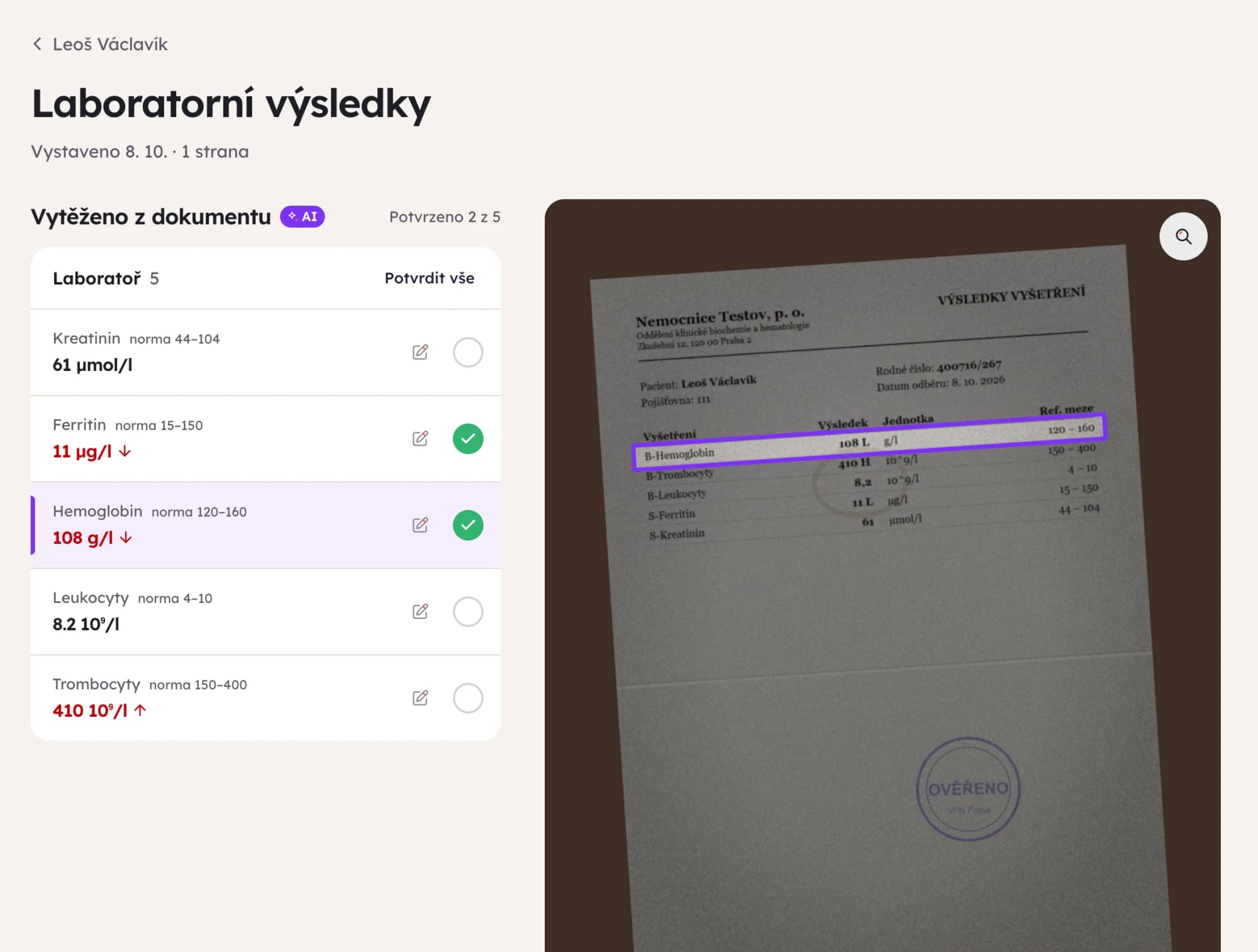
- AI reads the documents, a doctor confirms. Values are extracted in the background and highlighted right on the photo, so the doctor can check them at a glance and confirm or correct them. Nothing happens without that confirmation.
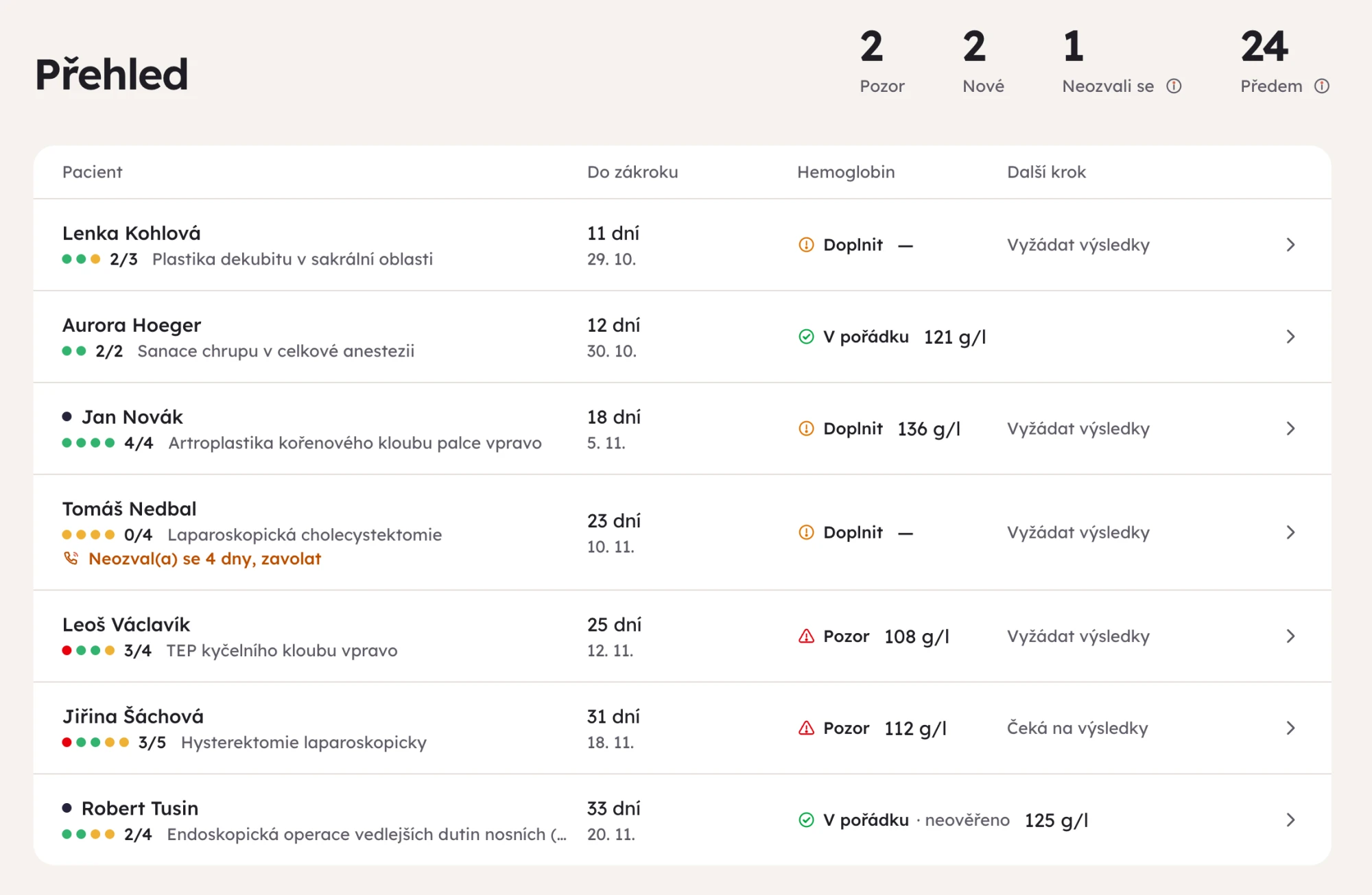
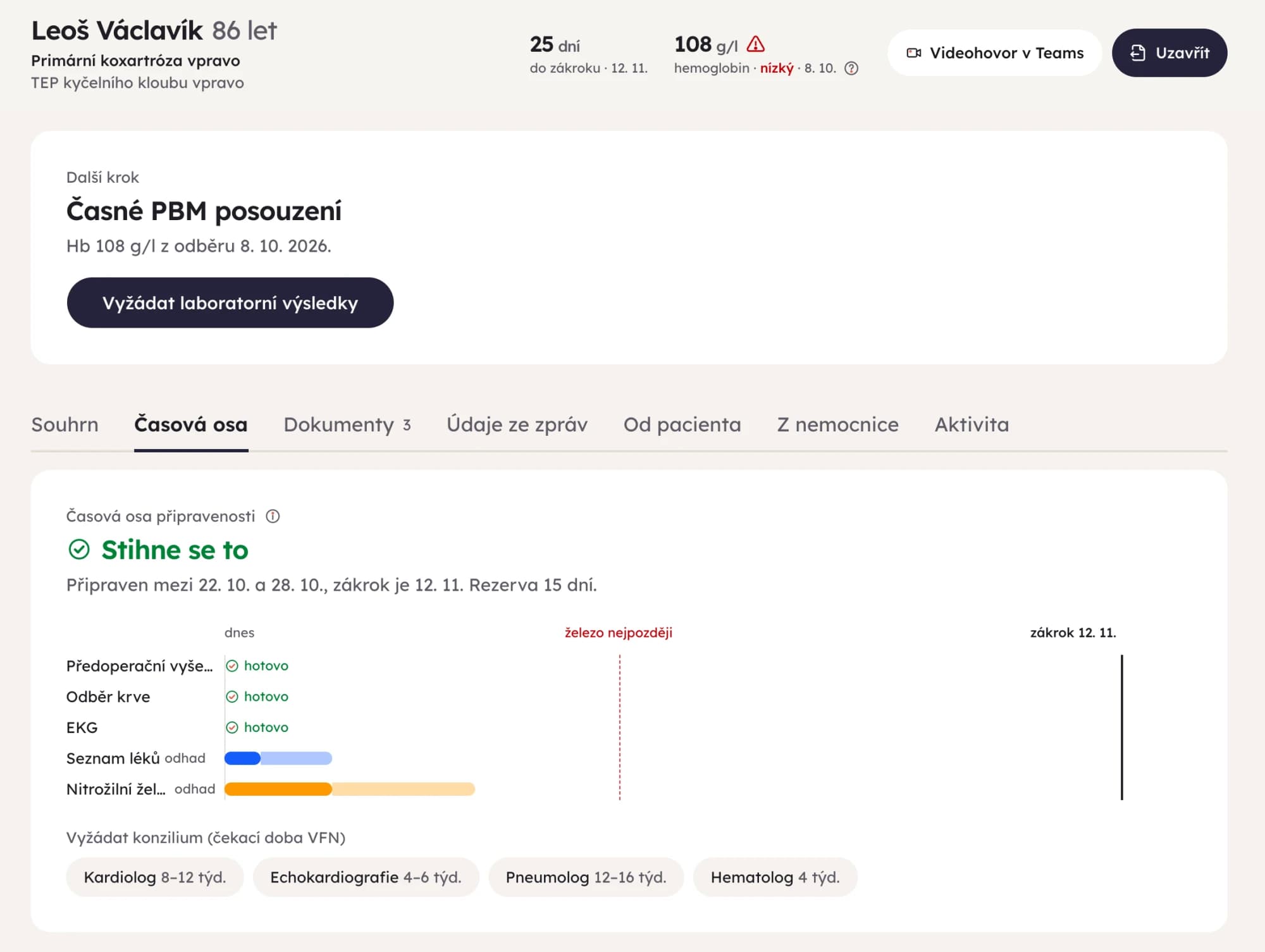
- The clinic acts right away. Haemoglobin below 120 g/l creates a task under the patient blood management rule, and a timeline shows whether preparation can still finish before the surgery date. Nurses see who hasn't responded yet, so they can follow up in time.
Here's what it looks like. The app is in Czech, and every patient in the screenshots is fictional demo data.
How we built it in 24 hours
| Part | What we used |
|---|---|
| Web app | Next.js |
| Document scanning | OpenCV, scanic and MediaPipe find, crop and clean up the page right in the browser |
| Reading values | Azure OpenAI with vision, running in the EU Data Zone |
| Hospital data | InterSystems IRIS for Health over a FHIR API, with synthetic patients from Synthea |
| Patient sign-in | Bank iD (sandbox) |
| Video consultations | Microsoft Teams |
| Clinical rules | Public sources: Věstník MZ 1/2018 and the patient blood management consensus |
We tested everything on 53 fictional VFN documents and synthetic patient data. No real patient data was used at any point.
Doc. Bláha went through the prototype with us twice during the hackathon, and both times we left with a shorter, sharper to-do list.
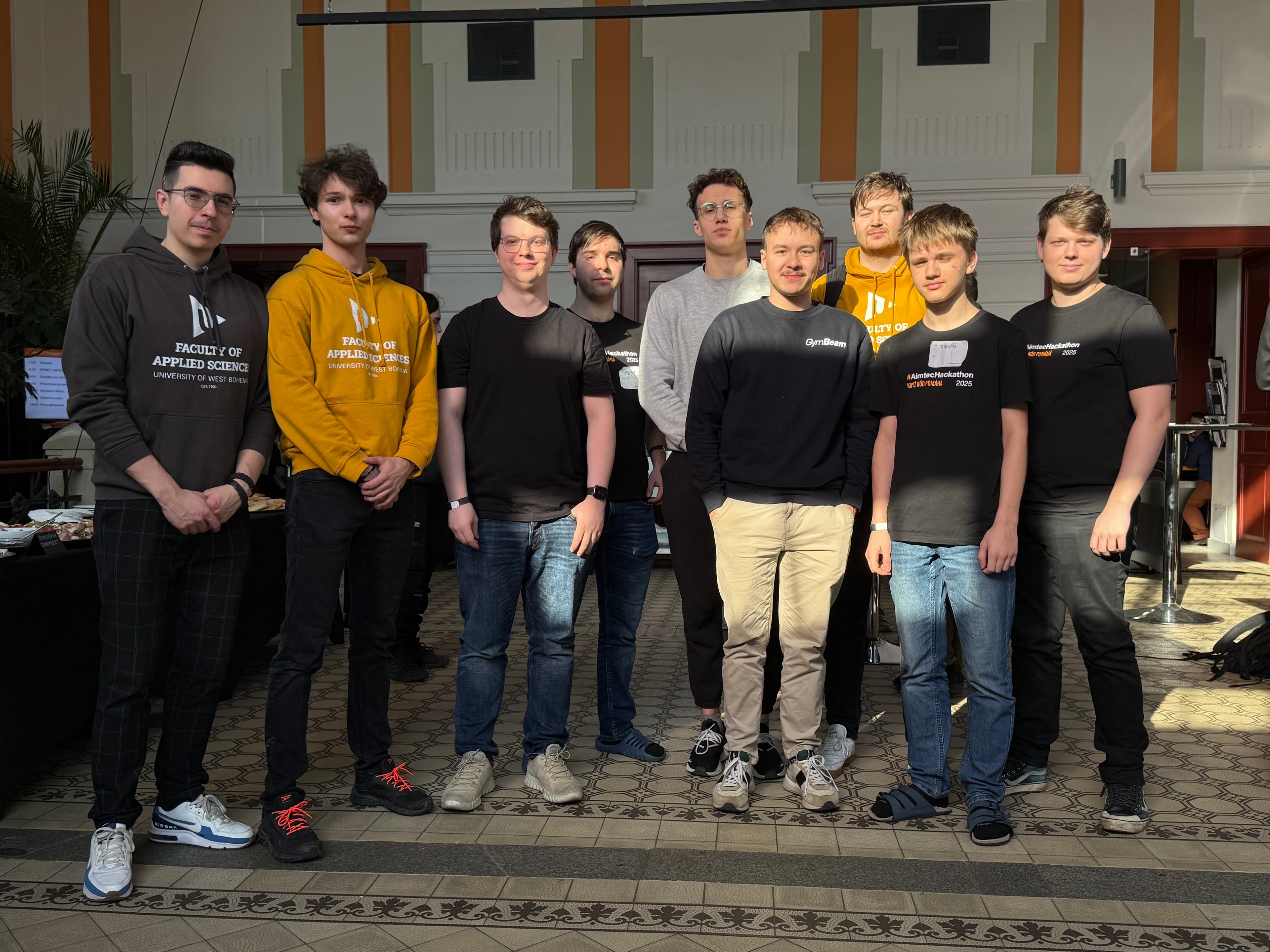
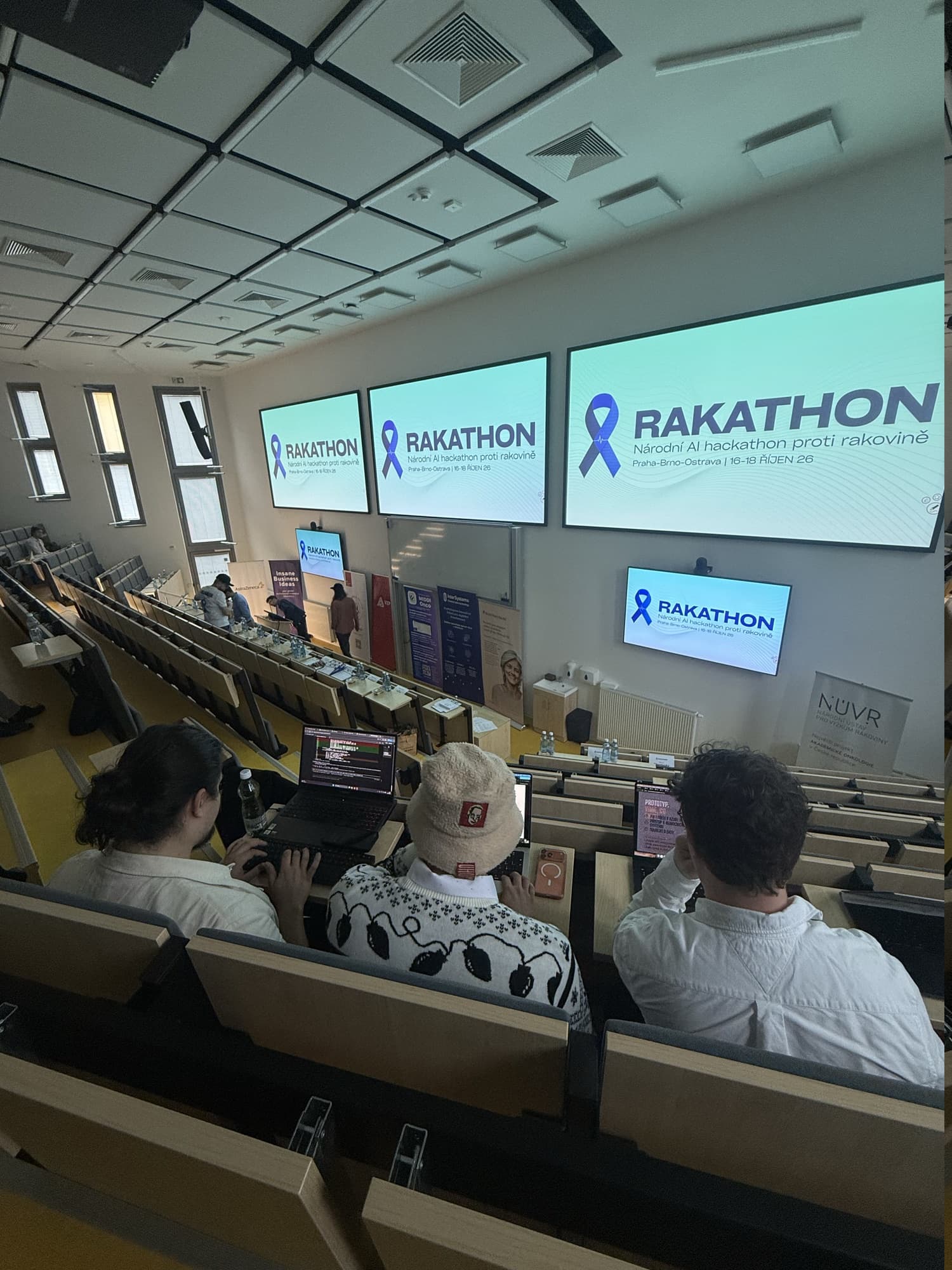
A small detail I love: the team photo at the top of this article was taken with Klidka's own document scanner. It's tuned to make paper lab reports readable, not to flatter faces, which explains the exposure.
Why earlier information matters
The evidence that earlier, smarter preparation pays off already exists. A virtually led pre-operative clinic in Madrid cut the anaesthesiologist's assessment time from 10 to 4.5 minutes and reduced same-day cancellations from 4.3% to 2.8% of procedures, without any AI.
Klidka adds the piece that's still missing in many hospitals: getting the patient's paperwork in early, in a form the clinic can act on, from patients who'd never use a portal.
The result: 6th of 100 teams
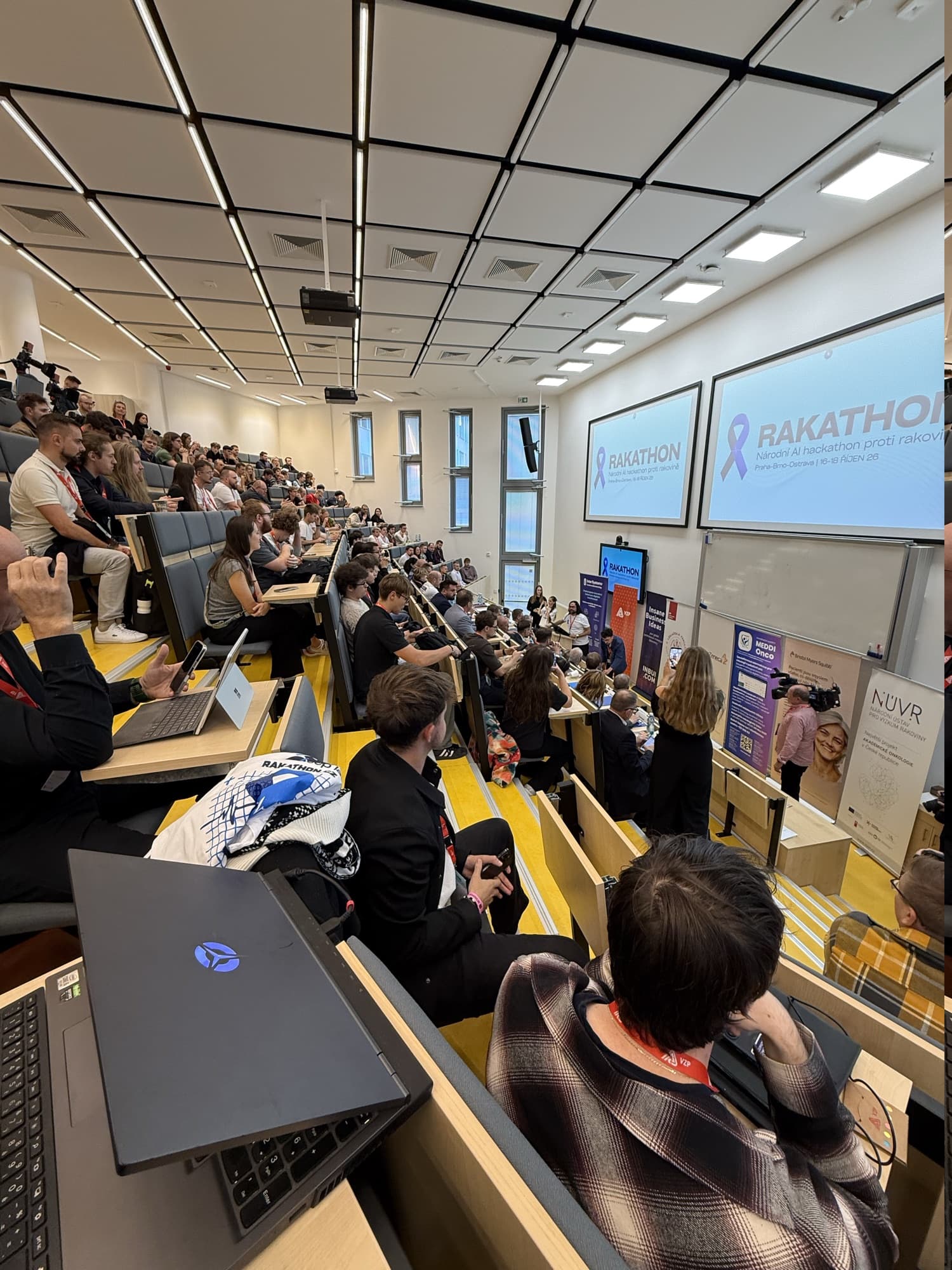
We finished 6th out of 100 teams. No podium, no trophy, and that's fine: in a field this strong, it's a result the four of us are proud of. Congratulations to the top three: KOMPACS by team 404: tumor not found, ONTRA – Oncology Trace by team ICU, and Cesta pacienta – společně k cíli by team MediBit.
What's next for Klidka
The plan we pitched is a pilot at VFN that measures two things: how much earlier haemoglobin results reach the clinic, and how many anaemic patients get treated in time. After that come SMS status updates for patients, signing through the Czech national identity system (NIA), and other VFN departments.
What I'm taking away
- Get the person who owns the problem into the room early. Testing a prototype with the doctor who'll actually use it beats any amount of guessing.
- Keep a human in the loop. In healthcare, AI that acts on its own is a non-starter. Letting AI do the reading and a doctor do the deciding made the product faster and trustworthy at the same time.
- Design for the least digital user. A photo of a paper report works for everyone, including patients who will never log into a hospital portal.
Thank you
Thank you to doc. Bláha and KARIM VFN for a challenge worth solving and for your time during the weekend. Thank you to the Rakathon organizers, the partners and mentors, and to the 2nd Faculty of Medicine for hosting us in Prague. And thank you, Tadeáš, Štěpán and Lukáš. Same time next year?
Frequently asked questions
What is Rakathon 2026?
Rakathon 2026 is the Czech national AI hackathon against cancer (Národní AI hackathon proti rakovině). It ran on 16–18 October 2026 in Prague, Brno and Ostrava at the same time. Teams had 24 hours to build a working prototype for a real challenge set by hospitals, the health insurer VZP and research partners.
Who won Rakathon 2026?
First place went to KOMPACS by team 404: tumor not found (Prague), a tool that finds prior CT, MR and PET scans relevant to a consultation. Second was ONTRA – Oncology Trace by team ICU (Ostrava), and third was Cesta pacienta – společně k cíli by team MediBit (Prague).
What is Klidka?
Klidka is a pre-surgery preparation app built by team Canbe at Rakathon 2026. Patients photograph their medical documents in any order, AI reads the values, a doctor confirms them, and the anaesthesia clinic sees missing results and risks such as low haemoglobin weeks earlier than today.
How did team Canbe place at Rakathon 2026?
Team Canbe finished 6th out of 100 teams with Klidka. Not a podium place, but a result the team is proud of.
Is Klidka used in hospitals?
Not yet. Klidka is a hackathon prototype tested on 53 fictional documents and synthetic patient data. The next step the team proposed is a pilot at the General University Hospital in Prague (VFN), measuring how much earlier haemoglobin results reach the clinic and how many anaemic patients get treated in time.
Where can I watch the Klidka pitch?
The final pitches and the awards ceremony of Rakathon 2026 were streamed on YouTube. Team Canbe's pitch starts at 30:20 in the recording. It is in Czech.